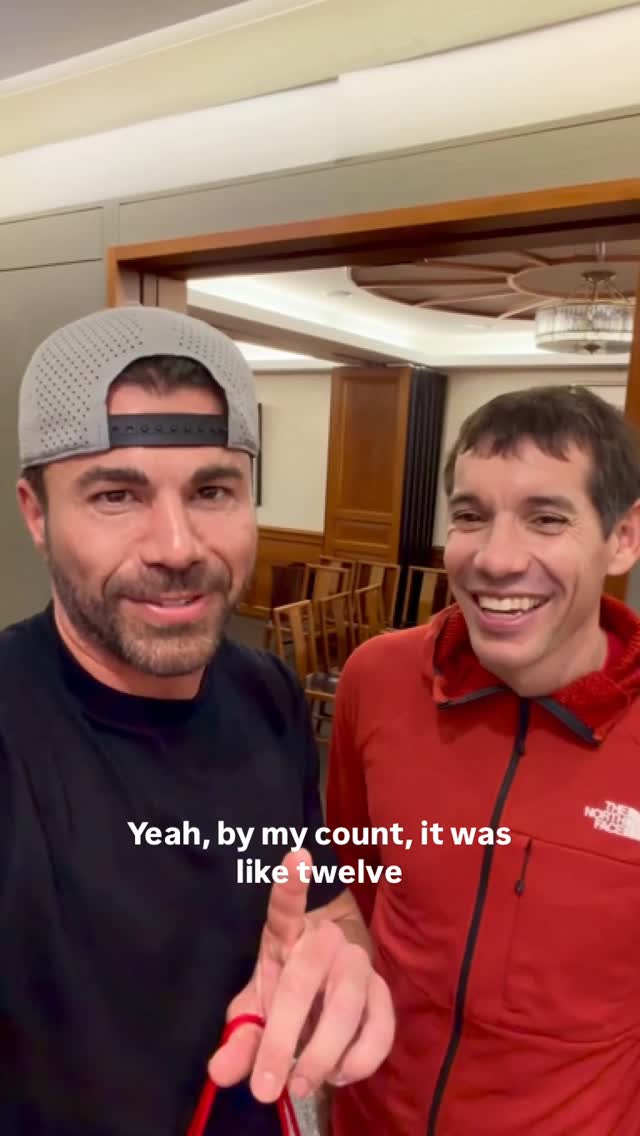
Mark Rober chats with climber Alex Honnold about eating chocolate dumplings before his record climb.
2.4Mviews
68Klikes
339comments
5.9Kshares
2.8Ksaves
3.1Mfollowers
22slong
2.8%liked
hookSeeing two famous creators talk warmly in a hallway stops viewers from scrolling.
Friendly faces. Mark Rober and Alex Honnold stand close in a warm lobby.
Warm lights. The background looks bright and cozy.
Direct greeting. Mark speaks right away in a casual tone.
Clear captions. Bold white text appears with every spoken word.
Broad interest. People like seeing what star athletes eat before a huge event.
retainThe playful argument over how many dumplings Alex ate keeps people watching to the end.
Silly debate. They joke about whether Alex ate eight or twelve dumplings.
Happy energy. Both men smile and laugh together naturally.
Single shot. The clip is 1 unbroken take lasting 22.2 seconds.
Simple props. Mark holds a small red shopping bag.
Clear line. The conversation stays on one easy topic from start to finish.
Good length. The brief video delivers a quick joke without dragging.
rewardViewers get a fun laugh and feel excited for the upcoming live climb.
Fun humor. The friendly bantering brings a quick smile.
Relatable moment. Seeing a top athlete load up on sweets feels grounded.
Climb excitement. It leaves viewers hyped to watch the live event.
mark roberalex honnoldclimbingskyscrapernetflixlive eventchocolate dumplingsfoodcarb loadingpregame dinnerinterviewbehind the scenesfree solo climberfunny sports video
Reporting live on @alexhonnold pregame dinner before he climbs the highest building anyone has ever climbed without ropes. #SkyscraperLIVE TONIGHT at 8 PM ET | 5 PM PT LIVE on Netflix
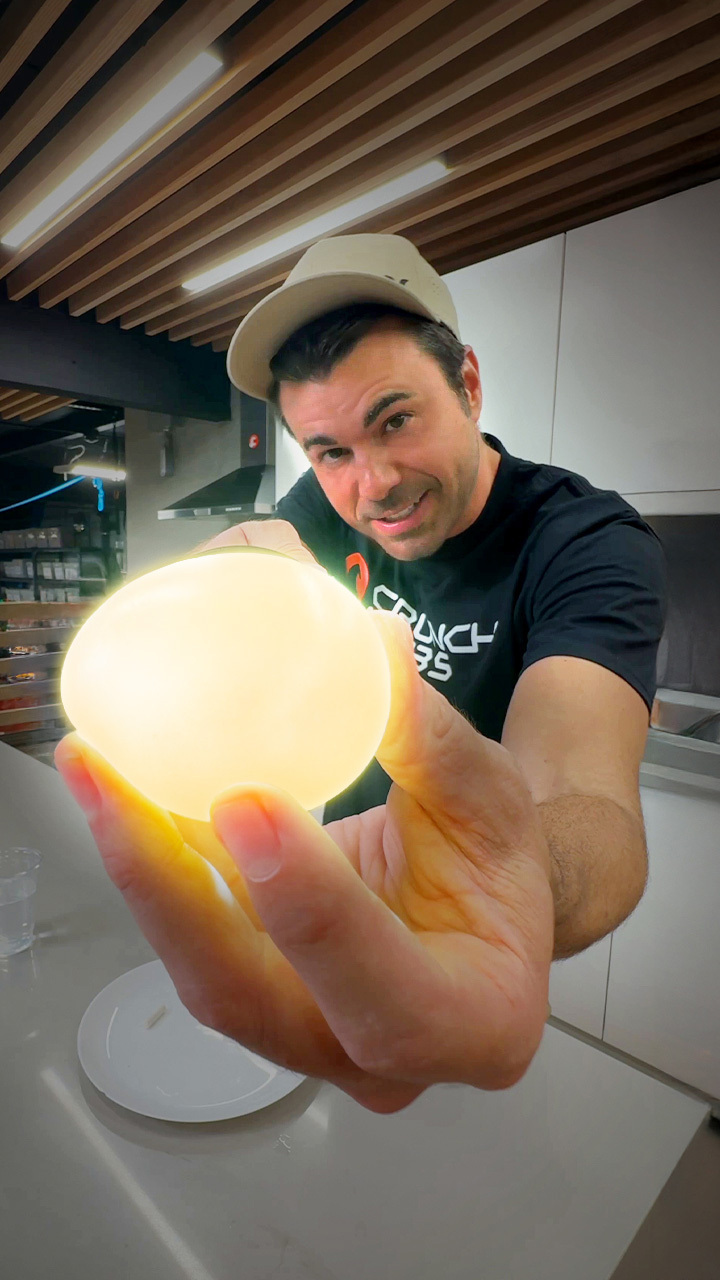
Mark Rober races a chef to explain the science behind turning an egg into a bouncy ball while the chef cooks the egg.
2.3Mviews
135Klikes
121comments
0shares
0saves
3.1Mfollowers
59slong
5.9%liked
hookThe sight of a squishy translucent egg dropping onto a plate instantly makes people stop scrolling to figure out what it is.
First half second. A man holds up a squishy rubbery egg and drops it onto a white plate.
Setting and light. The video is set in a bright kitchen with clear lighting.
Audio track. The natural voices and kitchen sounds set a fun mood right away.
Broad appeal. Anyone interested in food, science, or cool tricks will want to watch.
retainViewers stay to see if the chef can finish cooking before the science lesson finishes.
Silly challenge. A fun race keeps viewers watching to see who wins.
Show and tell. Mark drops chalk in vinegar to show how the egg shell dissolves.
Friendly energy. Both men act energetic and playful throughout the clip.
Shot changes. The video has 23 shots in 59.4 seconds with a new shot about every 2.6 seconds.
Simple props. Eggs, vinegar, chalk, and a frying pan make the experiment easy to understand.
Clear steps. The story moves cleanly from the setup to the science lesson and the taste test.
Good timing. The one minute length gives enough time to teach the science without getting boring.
rewardViewers walk away with a fun science trick they can try at home.
Learned something. Viewers learn how acid dissolves calcium carbonate in eggshells.
Fun mood. The funny ending with the chef making a bad tasting egg makes people laugh.
Inspired to try. Viewers want to put an egg in vinegar at home to make a bouncy ball.
mark roberscience experimentbouncy eggvinegar egg trickscience demonstrationhow to make a bouncy eggkitchen sciencechemical reactionfun science lessoncool science hack
Mark Rober explains how airplane contrails warm the earth and how AI helps planes avoid making them.
1.8Mviews
89Klikes
1.2Kcomments
0shares
0saves
3.1Mfollowers
53slong
4.9%liked
hookThe video starts with an energetic presenter looking through binoculars at a plane and asking a surprising question.
Friendly host. Mark Rober looks up through binoculars with a curious face to grab attention right away.
Bright outdoor setting. Clear blue sky and green plants create a clean background.
Upbeat audio. Clear voice narration begins immediately with an engaging opening phrase.
Bold text. Large white text on screen highlights the opening question.
Universal topic. Airplanes and clouds in the sky are things almost everyone notices.
retainClear animations and simple science keep viewers interested as the video explains a fix to a real climate problem.
Surprising science facts. The video shows that contrails trap heat like a blanket around the earth.
Simple visual charts. Clean graphics and paper drawings explain weather science without hard jargon.
Energetic presenter. The speaker stays expressive and keeps the story moving.
Shot count. The video uses 25 shots across 52.7 seconds to show planes, diagrams, and satellite maps.
Easy structure. It moves step by step from the problem to the cause and then to the solution.
Right video length. The clip covers the topic completely without feeling too long.
rewardViewers learn the true climate effect of airplane trails and how technology can fix it.
Learned real science. Viewers discover why white trails behind planes trap heat at night.
Hopeful about technology. People see how smart computer models help pilots avoid warm humidity zones.
Easy to share. Viewers get a fun fact they can tell their friends next time they see a plane in the sky.
mark roberairplanescontrailsclimate changegoogle aiscience factsenvironmentflyingweatherlearningtech solutionaviationhow it worksglobal warmingshort video
These Clouds Aren’t What You Think... Now You Know Thanks To @google