The idea, and why TikTok rewards it more than any other platform
It works out why the videos winning in your niche held attention, then writes new concepts that use the same mechanism on your topic, while the format is still working.
The system tracks creators in your niche, pulls their best-performing recent videos, works out why each one worked, and writes new concepts that use the same mechanism for your own subject. In the run I show, the videos it found ranged from over 20 million views down to niche ones in the low hundreds of thousands.
This matters more on TikTok than anywhere else, because TikTok is the platform where a format spreads fastest and dies soonest. The same hook shape carries a dozen creators in a fortnight and then stops working. Being three weeks late is the difference between riding it and looking like you copied.
What is being copied, exactly
Not the topic. The mechanism: the hook shape, the way tension is held, where the payoff sits. That is the transferable part and it is not anyone's property. If the output reads like a rewrite of somebody's video, your generation config is too thin.
The four tabs
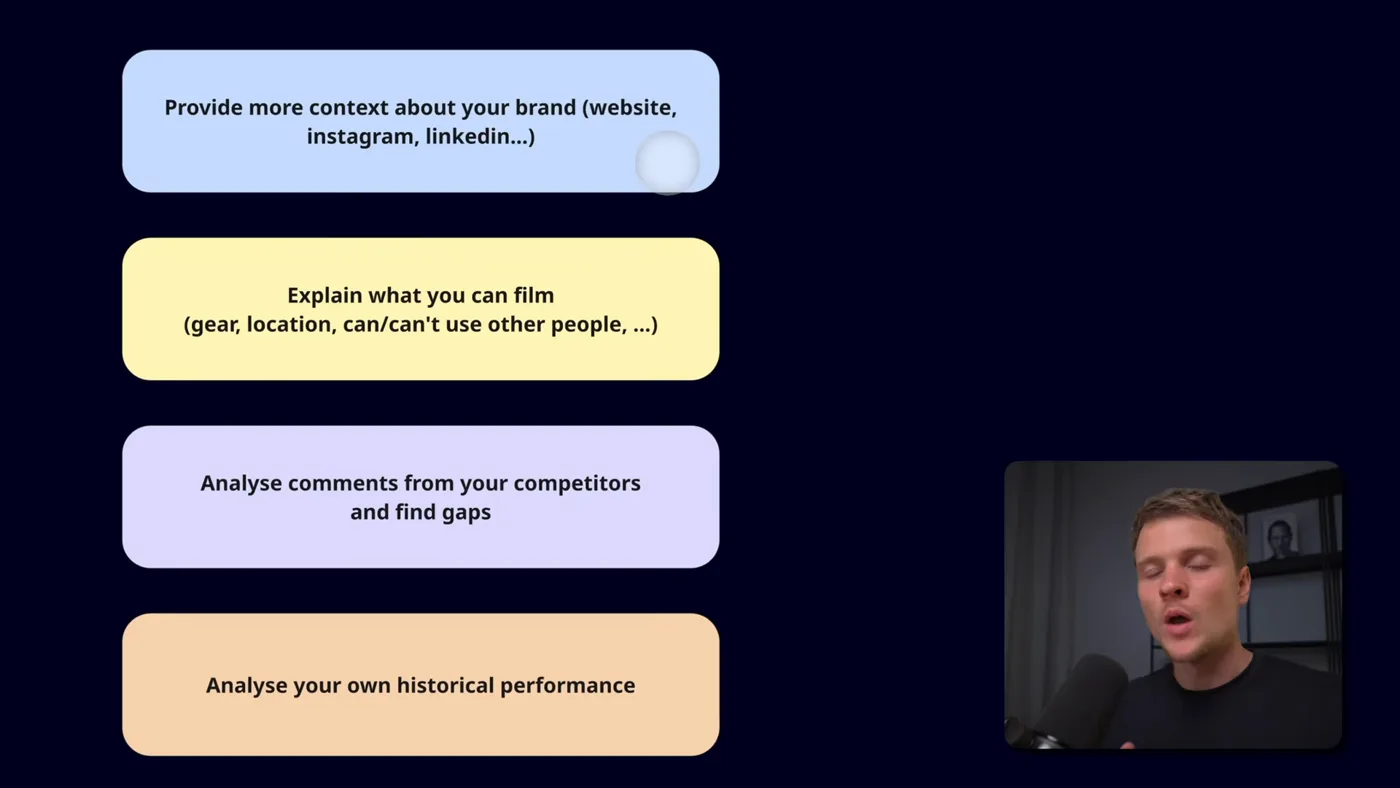
- Creators
- The competitors you track. Add by username, tagged into a category.
- Configs
- Who you are and how to analyse. This is the actual product.
- Run pipeline
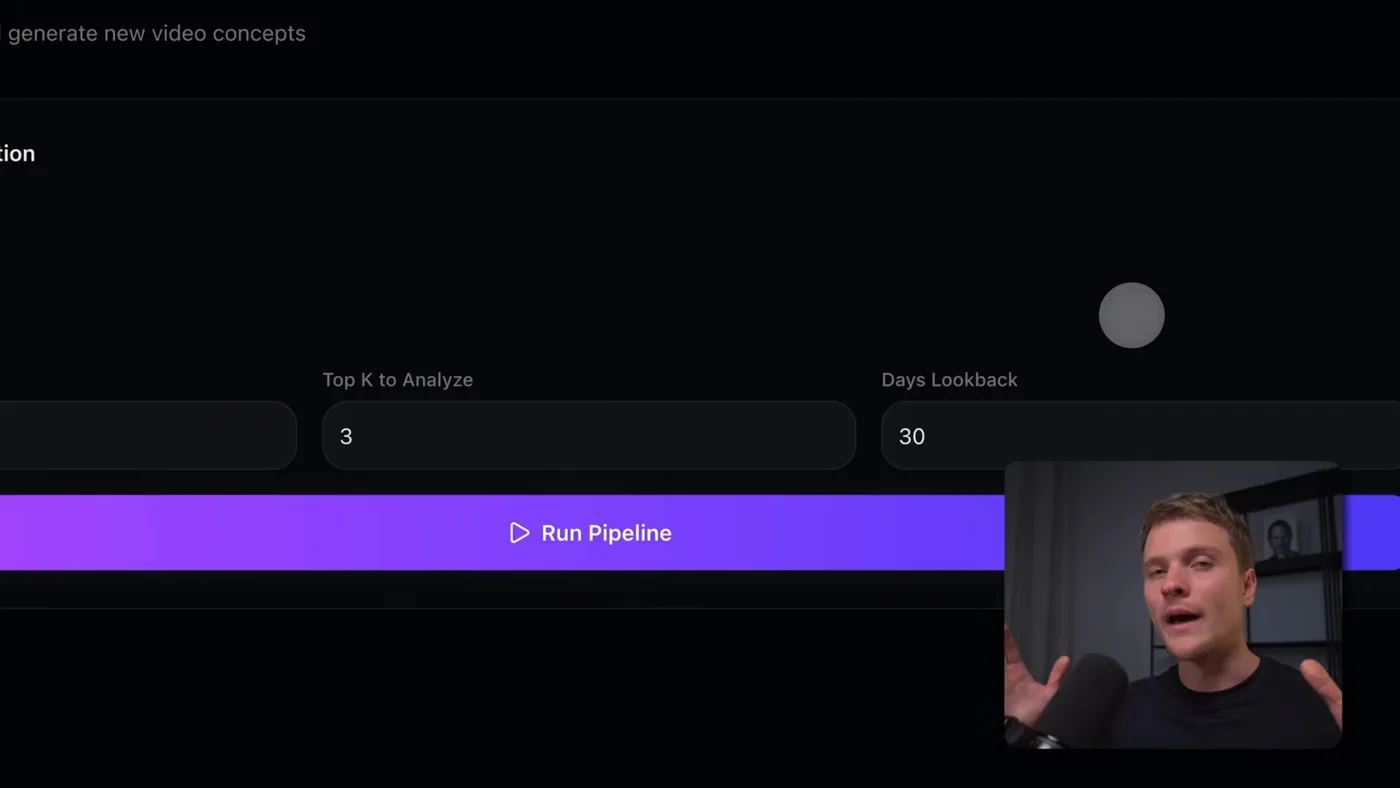
- How many videos, over what window, for which config.
- Results
- Every video, its analysis, and your concepts beside it.
The creators tab records followers and popular-video counts as it scrapes, which is how you tell a creator worth learning from (strong views relative to their size) from one coasting on an old audience.
The pipeline settings that matter
1Build a creator list in one niche
Paste a TikTok username, tag it with a category, press add. It scrapes the profile and records the follower count and how many popular videos they have, so you can see at a glance whether the account is worth studying.
The categories matter more than they look. If you run content for several brands or clients, each gets its own category and its own config, and one project serves all of them.
2Write the analysis config
Three things to extract from every video, and on TikTok specifically I would not cut any of them:
- The hook. The first two seconds. On TikTok this is not most of the battle, it is the whole battle.
- The retention mechanism. What stops the thumb at second five.
- The call to action, if there is one, and where it sits. This is the one people leave out, and it is the difference between views and sales.
3Write the generation config
Who you are, what your content is about, and what you want back. Be specific about the output format: a script alone, or a script plus b-roll direction, or shot notes.
I ask for three different scripts per idea, for reasons in their own section below.
4Set the window before you set the count
My settings: Last 20 videos per creator, take the top 3, only from the past 30 days.
The 30 days is the setting that matters. TikTok trends have a shelf life measured in weeks. A video that went viral six months ago is a history lesson, and copying a depleted trend is worse than having no idea at all, because it looks late.
5Run it and wait about fifteen minutes
About fifteen minutes for a full run. You get every video with its analysis, a link back to the original, and your own concepts beside it.
Writing the two configs
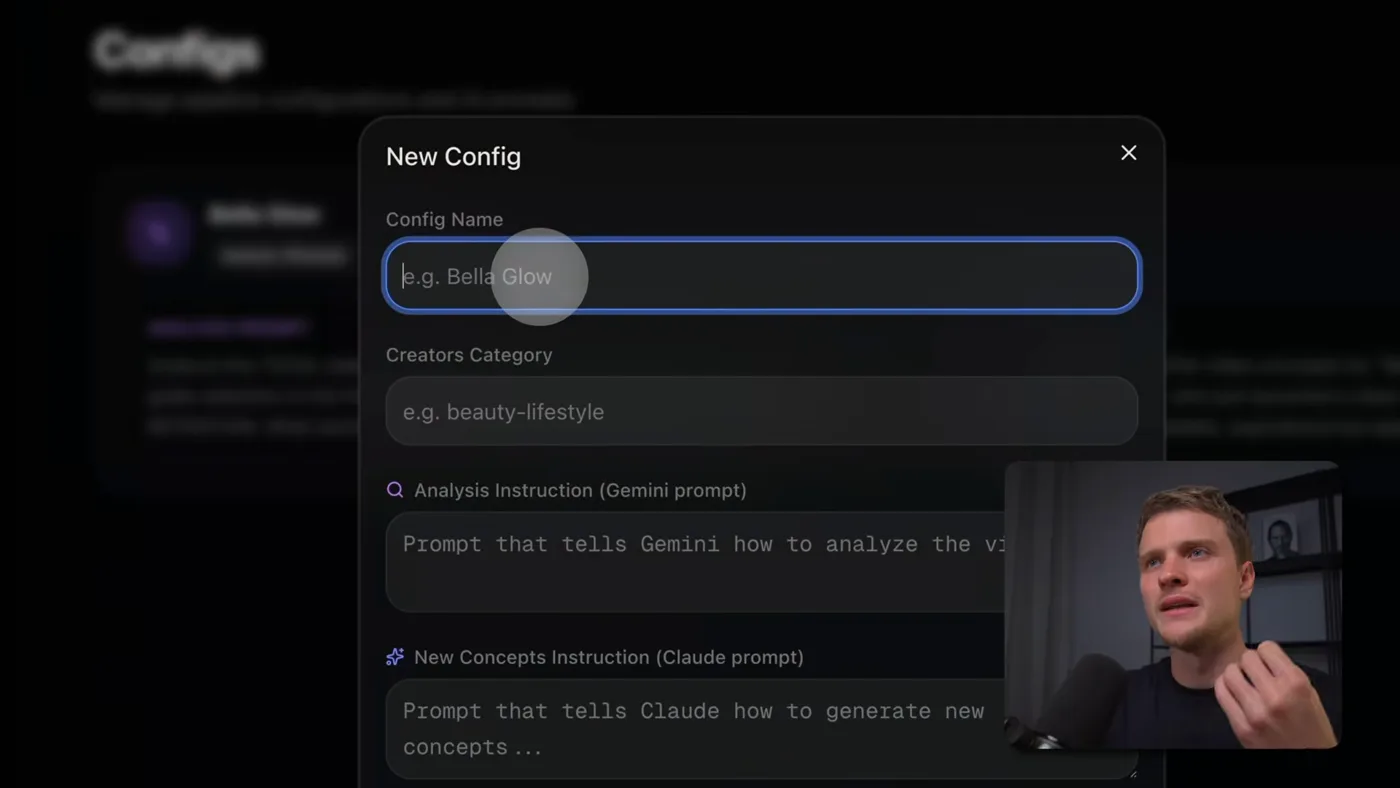
Everything else is plumbing. These decide the output. Here is roughly what mine says:
ANALYSIS
for each video, tell me:
- the hook, word for word, and why it stops the scroll
- the retention mechanism: what holds attention past second five
- the call to action, if any, and where it sits
- the structure, beat by beat

GENERATION
we are BRAND. we make content about PILLARS for AUDIENCE.
take the mechanism from the video, not the topic,
and write three different scripts applying it to our subject.
include b-roll direction for each shot.
The phrase "take the mechanism, not the topic" is doing a lot of work there, and it is the line I would not cut.
Why three scripts per idea
I ask for three concepts per source video rather than one, and the reason is not that more is better.
You cannot judge one script in isolation. Read a single option and you either film it or you do not, and either way you are guessing. Read three framings of the same idea and the best one is usually obvious in seconds, because you are comparing rather than evaluating.
The marginal cost of the extra two is a few cents. The marginal value is that you stop filming things you were lukewarm about because they were the only thing on the table.
What it costs
- Claude plan
- Pro, $20 a month, required
- Apify, for scraping TikTok
- $5 of free credit a month
- Gemini, for watching the videos
- Free tier in Google AI studio, with a daily cap
- Time per run
- About 15 minutes
- What runs out first
- The Gemini free tier, because video analysis is the expensive call
Where it goes wrong
- A stale window. The most damaging setting. Widen it past 30 days and you get depleted trends presented confidently.
- A thin generation config. Then it summarises instead of translating, and the output is somebody else's video with your words on it.
- Creators who are too big. A 20 million view video from an account with 30 million followers may have worked because of the account. Mix in mid-size creators where the idea had to carry it.
- The Gemini cap. A large run hits it. Fewer creators per run, not a bigger plan.
- Reading it as a to-do list. It is a shortlist. Three or four usable ideas out of a run is a good run.
The same pipeline for Instagram is on The reels guide, the version that writes and packages posts is on The content guide, and the account-level strategy layer is on The growth guide. Never used claude code? Start here.